Scalp Care
Dandruff vs Dry Scalp: How to Tell the Difference
By the MERU Hair Care team · Updated · 4 min read
Short answer
Dry scalp gives small, white, dry flakes and a tight feeling and improves with moisturising oil and gentle washing. Dandruff gives larger, oily, yellowish flakes with itching and needs an anti-dandruff shampoo. If it does not improve, see a dermatologist.
Quick comparison
| Dry scalp | Dandruff | |
|---|---|---|
| Flakes | Small, white, dry | Larger, yellowish, can look oily |
| Scalp | Tight, dry, maybe itchy | Itchy, sometimes red or greasy |
| Common in | Winter, after hot showers, hard water | Hot, humid weather, oily scalps |
| Helps | Lukewarm water, gentle shampoo, light oiling | Medicated anti-dandruff shampoo |
| Oil? | Usually helpful | Can make it worse |
Caring for a dry scalp
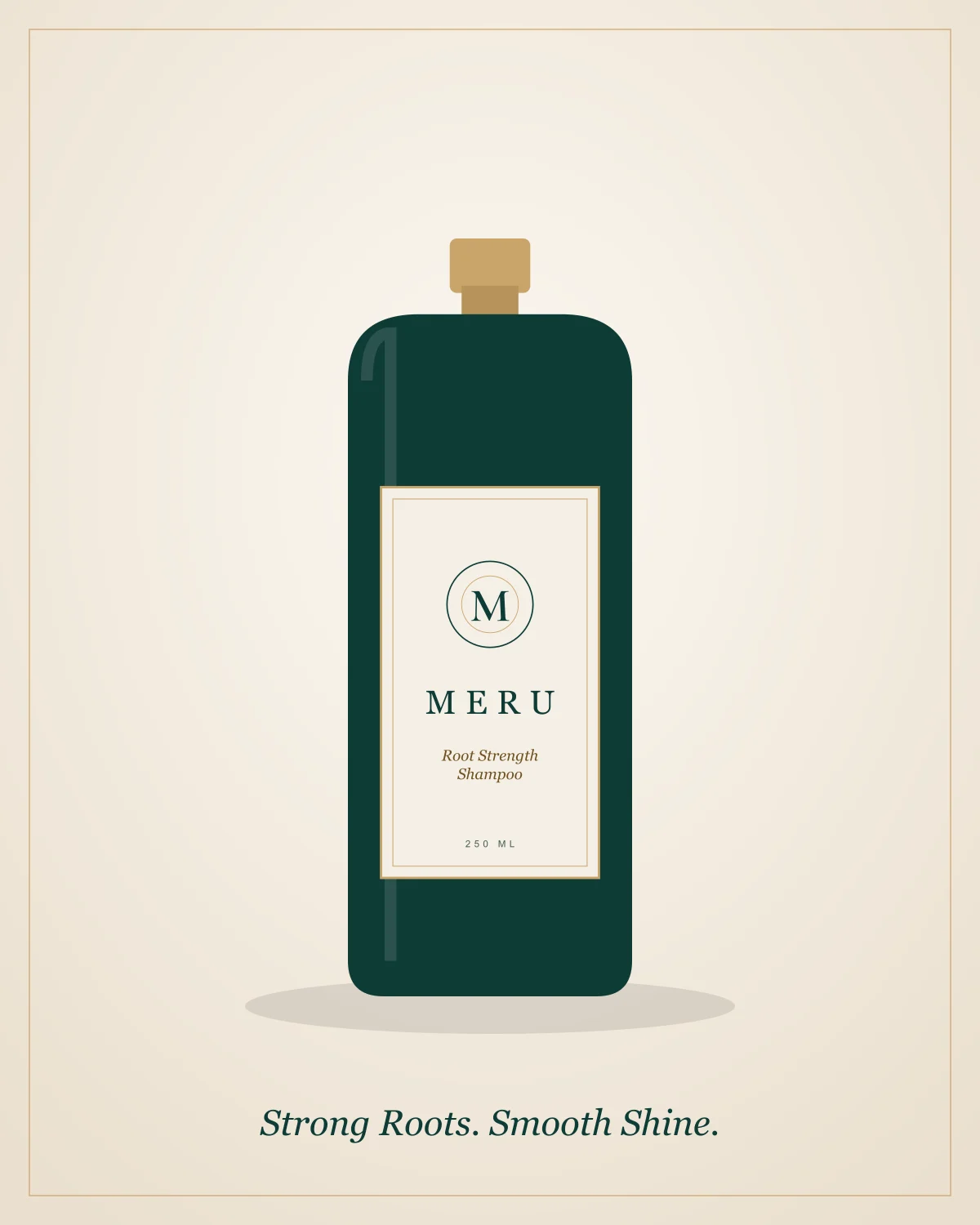
- Wash with lukewarm water and a gentle shampoo such as MERU Root Strength Shampoo.
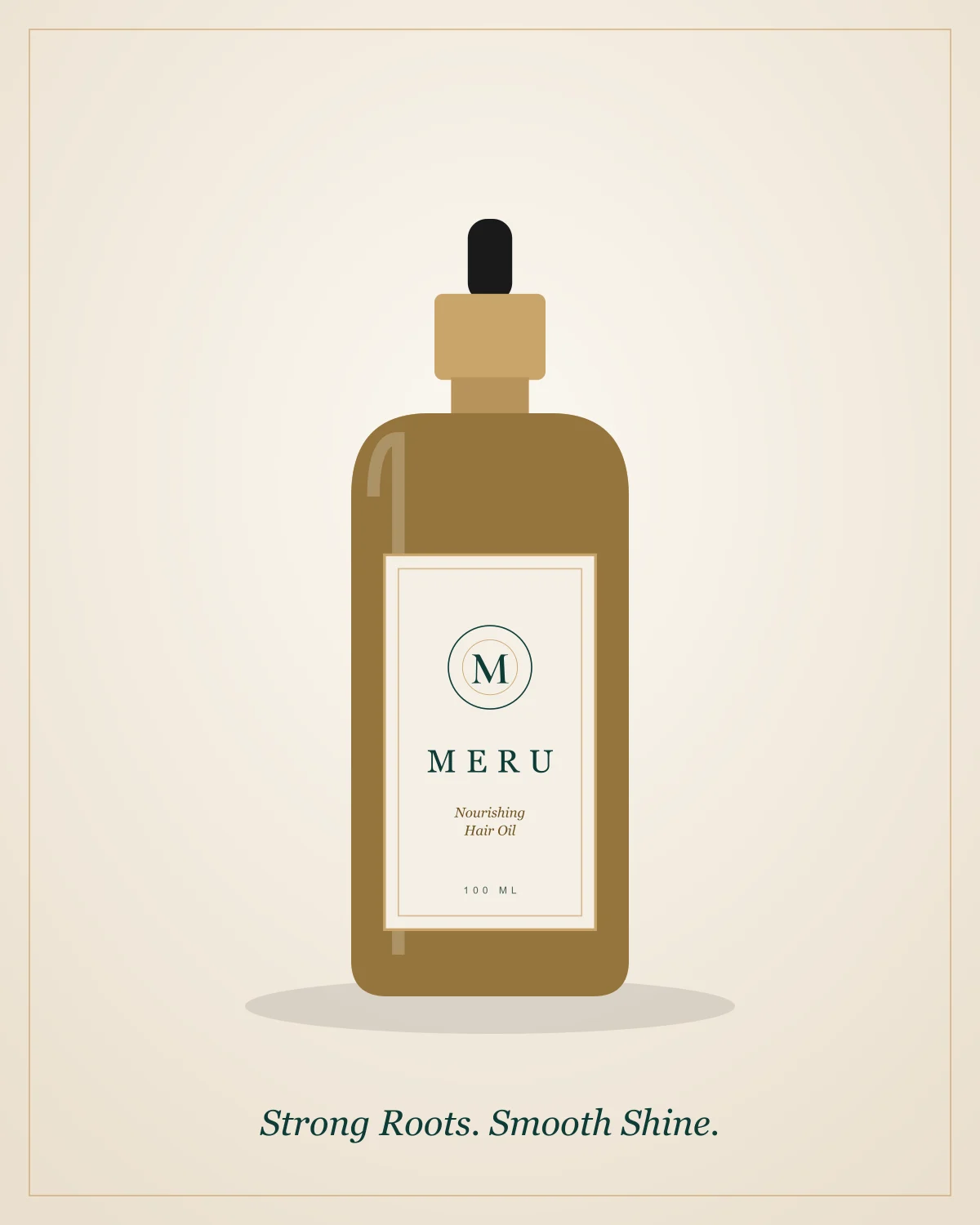
- Oil lightly once or twice a week with MERU Nourishing Hair Oil, for an hour, then wash out.
- Do not scratch with nails; it causes irritation.
If it looks like dandruff
Use a medicated anti-dandruff shampoo from a pharmacy (such as ones with zinc pyrithione or ketoconazole), following the pack directions. Persistent, severe or painful flaking, redness or scabs should be seen by a dermatologist. MERU products are cosmetics and do not treat dandruff or scalp conditions.
Frequently asked questions
Does oiling cause dandruff?
Oil does not cause dandruff, but it can make flaking from a yeast-related condition worse. If you have oily, itchy dandruff, skip oiling until it is under control.
Does hard water cause dandruff?
Hard water can leave build-up that looks like flakes and irritates the scalp. Good rinsing helps, but true dandruff needs the right shampoo.
This guide is general hair care information, not medical advice. For sudden, patchy or persistent hair loss or scalp problems, please see a dermatologist.